
The Art and Science of the Porcelain Veneers Process
A radiant smile is often considered one of a person’s most influential assets. It conveys confidence, health, and warmth. However, not everyone is born with a “picture-perfect” set of teeth. Chips, deep staining, minor misalignments, and gaps can lead many to feel self-conscious. This is where the porcelain veneers process becomes a transformative solution. At Doral Dental Specialty Center, we view this procedure not just as a clinical task, but as a blend of dental science and artistic craftsmanship.
Understanding the journey toward a new smile is essential for any patient considering cosmetic dentistry. Porcelain veneers are ultra-thin shells of high-grade ceramic that are custom-bonded to the front surface of your teeth. Unlike simple whitening treatments, veneers can fundamentally alter the shape, size, color, and overall symmetry of your smile. Because this is a multi-step journey involving consultation, preparation, and final bonding, being well-informed ensures that you and your dentist are aligned on the aesthetic goals.
Why Choose Porcelain Over Other Options?
When patients begin their research, they often find themselves debating between porcelain veneers vs resin veneers. While composite resin is a quicker, more budget-friendly alternative, porcelain remains the “gold standard” for several reasons. Porcelain mimics the light-reflecting properties of natural tooth enamel more accurately than any other material. Furthermore, it is incredibly resistant to stains from coffee, tea, or smoking, ensuring your investment stays bright for a decade or more.
Initial Consultation: Mapping Your Smile Journey
The first step in the porcelain veneers process is perhaps the most critical: the comprehensive consultation. During this visit at our Doral office, we don’t just look at your teeth; we look at your facial proportions, your gum line, and even your skin tone to determine the most “natural” shade of white for your new veneers.
Digital Smile Design and Goal Setting
Modern cosmetic dentistry relies heavily on digital imaging. We use high-resolution scans and photos to create a digital mockup of your potential results. This allows you to see the “after” before we even begin the “before.” This phase is also where we address the common question of porcelain veneers or crowns.
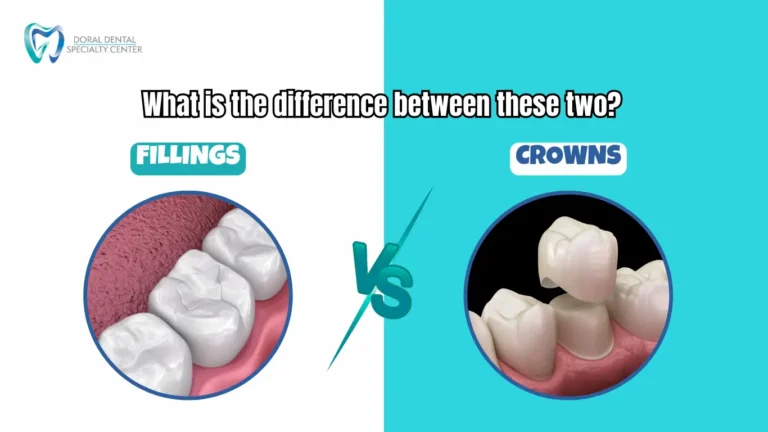
If your teeth are fundamentally healthy but have surface-level aesthetic issues, veneers are the preferred choice because they are minimally invasive. However, if a tooth has significant structural damage, a large filling, or has undergone a root canal, a crown might be recommended to provide 360-degree protection. During your consultation, we provide a transparent breakdown of which restoration suits each individual tooth to ensure longevity and oral health.
The Preparation Phase: Precision and Preservation
Once the treatment plan is finalized, the actual preparation of the teeth begins. Many patients feel anxious about “shaving down” their teeth, but the reality of the modern porcelain veneers process is far more conservative than it was decades ago.
Enamel Shaping
To ensure the veneers do not look bulky or “fake,” a very thin layer of enamel, usually about 0.5 millimeters, is removed from the front and sides of the teeth. This creates the necessary space for the porcelain to sit flush with your gum line. This step is typically performed under local anesthesia to ensure total comfort.
Impressions and Temporaries
After the teeth are shaped, we take precise digital or physical impressions. These serve as the blueprint for the dental laboratory. Because high-quality porcelain veneers are handcrafted by master ceramists, there is a waiting period of about one to two weeks. During this time, we provide you with temporary veneers.
These temporaries are more than just “fillers.” They serve as a functional trial. You can “test drive” your new smile’s shape and length, providing feedback to us so we can make any necessary adjustments to the final permanent versions. It is important to note that during this stage, your teeth might be slightly more sensitive to hot and cold, which is why the protection of the temporaries is vital.
The Art of Custom Fabrication
While you go about your daily life with your temporaries, a specialized dental lab is at work. This is where the distinction in porcelain veneers vs resin veneers becomes most apparent. Composite resin is sculpted directly in the mouth by the dentist, whereas porcelain is layered and baked in a kiln to achieve a depth of color and translucency that resin simply cannot replicate.
Choosing the Right Material
The laboratory uses high-strength dental ceramics, such as E.max or zirconia-based porcelain, depending on the patient’s bite strength and aesthetic needs. Every ridge, translucency gradient, and subtle texture is included to ensure that when the light hits your teeth, they look like natural, healthy enamel rather than a flat, monochromatic plastic.
Final Bonding: The Transformation
The final appointment is the “reveal” day. This is the culmination of the porcelain veneers process. First, the temporary veneers are carefully removed, and the underlying teeth are cleaned.
The Try-In Phase
Before the permanent cement is applied, we place the veneers on your teeth using a temporary paste. This allows you to look in the mirror and approve the final color, fit, and shape. If any minor adjustments are needed, they are handled before the bonding is finalized.
Permanent Cementation
Once you give the “thumbs up,” the teeth are etched with a mild acidic gel to create a microscopic rough surface, which helps the adhesive bond. A special light-sensitive resin is applied to the veneer, which is then placed on the tooth. A high-intensity curing light is used to harden the adhesive instantly, creating a bond that is remarkably strong. The result is a seamless integration between the natural tooth structure and the porcelain shield.
Maintenance and Long-Term Success
A common misconception is that once the porcelain veneers process is complete, the teeth are “indestructible.” While porcelain is highly durable, the underlying tooth is still susceptible to decay, and the gums are still prone to disease.
- Oral Hygiene: Brushing twice a day with non-abrasive toothpaste and daily flossing is non-negotiable.
- Protection: If you have a habit of grinding your teeth at night (bruxism), we will provide a custom nightguard to prevent the porcelain from chipping.
- Regular Checkups: Professional cleanings at Doral Dental Specialty Center ensure that the margins of the veneers remain clean and that your gingival health is optimal.
Comparing porcelain veneers or crowns in terms of maintenance, both require the same level of care. However, veneers require you to be slightly more mindful of biting into extremely hard objects (like ice or hard candy) with your front teeth, as the shearing force can occasionally damage the porcelain.
Frequently Asked Questions (FAQs)
1. How long does the porcelain veneers process take?
Typically, the process requires two to three appointments over a period of two to three weeks. This includes the initial consultation, the preparation and impression visit, and the final bonding appointment.
2. Is the procedure painful?
Most patients experience little to no discomfort. Local anesthesia is used during the preparation phase to ensure you don’t feel anything. Some mild sensitivity may occur while wearing temporaries, but this subsides once the permanent veneers are bonded.
3. What is the main difference between porcelain veneers vs resin veneers?
Porcelain veneers are more durable, stain-resistant, and offer a more natural, translucent appearance. Resin veneers (composite bonding) are faster and cheaper but are prone to staining and typically only last 5–7 years, compared to 10–15+ years for porcelain.
4. How do I know if I need porcelain veneers or crowns?
Veneers are ideal for cosmetic improvements on healthy teeth. Crowns are necessary if the tooth has significant decay, large cracks, or structural weakness, as they cover the entire tooth rather than just the front surface.
5. Can porcelain veneers be whitened?
No, porcelain is non-porous and does not respond to chemical whitening. If you plan on whitening your surrounding natural teeth, it is best to do so before the porcelain veneers process so the dentist can match the porcelain to your new, brighter shade.
6. Are porcelain veneers permanent?
The process is considered irreversible because a small amount of enamel is removed. While the veneers themselves may eventually need replacement after 15 years, the tooth will always require some form of restoration.
Recommendation
If you are ready to stop hiding your smile and start living with a newfound sense of confidence, we recommend scheduling a consultation at Doral Dental Specialty Center. Our experts specialize in complex cosmetic rehabilitations, ensuring that your porcelain veneers process is smooth, comfortable, and yields world-class results.
Contact Us Today:
- Office: Doral Dental Specialty Center
- Address: 7902 NW 36th St Suite 212, Doral, FL 33166
- Phone: (305) 477-7655
Don’t settle for a smile you don’t love. Let us help you design the one you deserve.
Recent Posts
- Tooth Extractions in Doral, FL: What to Know
- Invisalign Before and After: What to Expect
- Bone Grafting for Dental Implants Cost: What You Need to Know Before Implant Treatment
- General Dentistry in Doral FL: Complete Guide to Preventive Dental Care
- Emergency Dentistry Doral FL: Where Can You Get Fast Help for a Dental Emergency?