
Invisalign Before and After: What to Expect
Invisalign Before and After: What Can You Expect?
If you are considering clear aligners, one of the first things you may want to know is what your smile could look like before and after Invisalign treatment. Invisalign is designed to gradually move teeth into planned positions using a series of custom-made, removable clear aligners. Because each treatment plan is different, the changes seen during and after treatment can vary depending on tooth position, bite concerns, treatment complexity, and how consistently the aligners are worn.
Understanding Invisalign before and after results can help you develop realistic expectations before starting treatment. Some patients may notice relatively subtle changes in the first few weeks, while more noticeable improvements become apparent as treatment progresses. In addition to changes in the appearance of the front teeth, Invisalign treatment may address certain spacing, crowding, and bite-related concerns when appropriate.
At Doral Dental Specialty Center in Doral, FL, patients can discuss their orthodontic goals with a dental professional and determine whether clear aligner treatment may be appropriate for their needs. A personalized evaluation is important because the ideal treatment approach depends on the individual’s teeth, gums, bite, oral health, and desired outcome.
What Does Invisalign Before and After Mean?
The phrase “Invisalign before and after” generally refers to the difference between a patient’s smile and tooth alignment before beginning clear aligner treatment and the appearance and alignment achieved after completing the planned treatment.
Before treatment, teeth may have different degrees of crowding, spacing, rotation, or misalignment. Some patients may also have bite concerns, such as an overbite, underbite, crossbite, or open bite. Invisalign uses a series of clear aligners that apply controlled pressure to specific teeth over time.
After treatment, the teeth may appear more evenly positioned, spaces may be reduced or closed when appropriate, and the overall alignment of the smile may be improved. However, Invisalign is not simply a cosmetic process. Tooth movement is an orthodontic process, and the treatment plan must account for oral health and the relationship between the upper and lower teeth.
The final result is influenced by both the treatment plan and the patient’s participation throughout the process.
What Changes Can Invisalign Make to Your Smile?
One of the reasons clear aligners are popular is that they can be used for several types of alignment concerns. The exact conditions that can be treated depend on the individual case and the provider’s assessment.
Crowded Teeth
Crowding occurs when there is insufficient space for teeth to align properly. Teeth may overlap, twist, or appear positioned behind or in front of neighboring teeth.
In appropriate cases, Invisalign can gradually reposition crowded teeth. As treatment progresses, the smile may appear more organized and the teeth may have more consistent spacing.
For example, a patient with mild to moderate front-tooth crowding may initially notice that one or two teeth overlap. During treatment, the aligners can progressively guide those teeth toward their planned positions. The final appearance depends on the available space and the specific treatment strategy.
Gaps Between Teeth
Spaces between teeth are another common reason patients consider clear aligners. Small gaps may occur between the front teeth or in other areas of the dental arch.
When Invisalign is appropriate for the underlying cause of the spacing, aligners can gradually move teeth closer together according to the treatment plan. The before-and-after difference may be particularly noticeable in photographs because spaces that were previously visible can become smaller or close.
However, not every gap has the same cause. Tooth-size discrepancies, missing teeth, gum-related conditions, or other dental factors may need to be evaluated before orthodontic treatment begins.
Rotated Teeth
Some teeth are rotated around their normal position. This can make the smile look uneven even when there is relatively little crowding.
Clear aligners can be designed to apply controlled forces to specific teeth. The amount of rotation that can be corrected varies by tooth and by case, so the anticipated result should be discussed during the consultation.
Bite Alignment
Invisalign treatment may also be used for certain bite concerns. Depending on the case, treatment may help improve the relationship between the upper and lower teeth.
A bite is more than the way the front teeth look when you smile. It involves how multiple teeth come together when you close your mouth and chew. For this reason, a treatment plan should consider function as well as appearance.
What Does Invisalign Look Like Before Treatment?
Before Invisalign treatment begins, a dental professional typically evaluates the patient’s teeth and overall oral health. Depending on the clinical situation, the evaluation may include photographs, digital scans or impressions, dental X-rays when indicated, and an examination of the bite.
This information helps create a treatment plan based on the patient’s current tooth positions and orthodontic objectives.
The “before” stage can include several different types of alignment concerns. One patient may have mild spacing, while another may have significant crowding or a combination of crowding and bite issues. This is why online Invisalign before and after pictures should be viewed as examples rather than guarantees of what an individual patient’s result will look like.
What Happens During Invisalign Treatment?
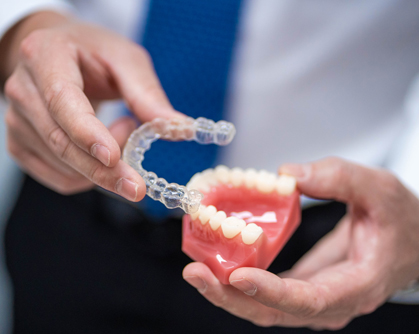
Invisalign treatment uses a sequence of clear aligners. Each aligner is designed to make small changes in tooth position. As the patient progresses through the prescribed sequence, the teeth gradually move toward the planned positions.
Custom Treatment Planning
Treatment begins with an assessment rather than simply choosing a standard set of aligners. The dental professional evaluates the patient’s teeth, bite, oral health, and treatment goals.
Digital technology may be used to capture detailed information about the teeth and create a virtual representation of the planned tooth movements. This allows the treatment approach to be developed around the patient’s individual anatomy.
Wearing the Aligners
Clear aligners are designed to be worn consistently according to the provider’s instructions. Because the aligners are removable, patients can take them out for eating, drinking certain beverages, and oral hygiene.
Consistency matters. If aligners are not worn as directed, the teeth may not progress according to the intended treatment sequence. In some cases, inconsistent wear can affect the overall timeline or require adjustments to the treatment plan.
Progress Checks
Follow-up appointments allow the dental team to evaluate how the teeth are responding. The provider may compare current tooth positions with the planned progression and determine whether the next stage of treatment should continue as expected.
These appointments are also an opportunity to discuss questions about aligner fit, oral hygiene, comfort, or changes in the smile.
How Long Does It Take to See Invisalign Before and After Changes?
There is no single Invisalign timeline that applies to every patient. Treatment length depends on the complexity of the case, the amount of tooth movement required, the patient’s response to treatment, and adherence to the prescribed aligner schedule.
Some patients may notice small changes relatively early, particularly in areas where the initial alignment issue is mild. More substantial changes generally become clearer as treatment progresses.
It is important to distinguish between seeing progress and completing treatment. A patient may notice that teeth are beginning to look straighter before the planned treatment sequence is finished. The final result should be evaluated based on the complete treatment plan rather than an early visual improvement.
Factors that may affect treatment duration include:
- The degree of crowding
- The amount of spacing
- Tooth rotations
- Bite considerations
- The number of teeth requiring movement
- Patient compliance with aligner wear
- The need for additional aligners
- Individual biological response to tooth movement
- Oral health considerations
Your dental professional can provide a more individualized estimate after evaluating your teeth.
Invisalign Before and After: What Results Are Realistic?
Realistic expectations are one of the most important parts of orthodontic treatment.
Invisalign can produce meaningful changes in appropriate cases, but the final outcome is not necessarily identical to a digital simulation or an example found online. Digital treatment previews illustrate the planned movement of the teeth, but actual results can vary.
For example, two people may have similar-looking front teeth but completely different underlying bite relationships. One person may require only minor alignment, while another may need a more comprehensive approach.
Patients should also understand that tooth movement takes time. Invisalign does not instantly straighten teeth. The aligners are designed to make gradual changes over a series of treatment stages.
A good before-and-after comparison should therefore consider both aesthetics and function. The goal is not simply to make teeth appear straighter in a photograph but to achieve an appropriate result based on the individual’s dental needs.
What Factors Affect Invisalign Before and After Results?
Several factors can influence the final appearance and stability of Invisalign treatment.
Starting Tooth Position
The original position of the teeth has a significant impact on the treatment plan. Mild alignment concerns may require fewer stages, while more complex cases can require a longer treatment process.
Treatment Compliance
Wearing aligners according to the provider’s instructions is an important part of treatment. Because clear aligners are removable, the patient plays an active role in the treatment process.
For example, regularly removing aligners for longer than recommended periods may interfere with the planned tooth movement. Following the prescribed wear schedule helps support predictable progression.
Oral Hygiene
Good oral hygiene remains important throughout orthodontic treatment. Food debris and plaque can accumulate around teeth, and wearing aligners over inadequately cleaned teeth may contribute to oral health problems.
Brushing, cleaning between teeth, maintaining regular dental visits, and keeping aligners clean are important habits during treatment.
Gum and Bone Health
Teeth move through the supporting structures of the mouth. Healthy gums and supporting bone are therefore important considerations before and during orthodontic treatment.
Patients with active dental or periodontal concerns may need those issues addressed before beginning tooth movement.
Retainer Use After Treatment
One of the most important parts of an Invisalign before and after journey occurs after the aligners are finished.
Teeth can shift over time because the tissues surrounding them continue to adapt. Retainers help maintain the positions achieved through orthodontic treatment.
A provider will recommend an appropriate retention plan based on the patient’s case. Wearing retainers as instructed can help preserve the alignment achieved during treatment.
Why Are Invisalign Before and After Photos Helpful?
Before-and-after photographs can help patients understand the types of changes that may occur with orthodontic treatment. They can show differences in tooth alignment, spacing, crowding, and smile appearance.
However, photographs should not be used as a substitute for a professional evaluation.
When reviewing Invisalign before and after examples, consider whether the patient had a similar starting condition. Look at factors such as the amount of crowding, spacing, tooth rotation, bite relationship, and overall treatment complexity.
It is also useful to remember that photographs may be taken under different lighting conditions, angles, or expressions. A professional evaluation provides much more meaningful information about what treatment may accomplish in an individual case.
Can Invisalign Improve Your Smile Without Traditional Braces?
For many appropriate cases, Invisalign offers an alternative to traditional braces. The aligners are transparent and removable, which can make them appealing to adults and teens who prefer a less noticeable orthodontic appliance.
Unlike fixed braces, clear aligners do not use conventional brackets and wires. Instead, a sequence of custom aligners guides the teeth through planned movements.
However, the choice between Invisalign and other orthodontic approaches should be based on the patient’s clinical needs. Some complex cases may require treatment approaches beyond clear aligners or may benefit from a combination of techniques.
A consultation can help determine whether Invisalign is a suitable option.
What Happens After Invisalign Treatment?
Completing the final aligner does not necessarily mean that orthodontic care is finished.
The next phase is retention. Retainers are designed to help keep teeth in their corrected positions.
Without appropriate retention, teeth can gradually move. This is why patients should view retainers as part of the overall treatment process rather than an optional final step.
A typical Invisalign journey can therefore be thought of as three stages:
- Evaluation and treatment planning
- Active aligner treatment
- Retention and long-term maintenance
Each stage contributes to the overall result.
Invisalign Before and After for Adults
Adults often consider Invisalign because they want to address tooth alignment while maintaining a relatively discreet appearance during treatment.
Adult patients may have additional considerations, such as previous orthodontic treatment, dental restorations, gum concerns, or changes in tooth position over time. These factors should be reviewed before starting treatment.
For example, an adult who had braces during adolescence may experience some shifting years later. If the teeth and supporting structures are healthy and the alignment issue is appropriate for clear aligner treatment, Invisalign may be considered as part of a new treatment plan.
The best approach depends on the individual’s current dental condition rather than simply their previous orthodontic history.
Invisalign Before and After for Teens
Teenagers may also be candidates for clear aligner treatment. The provider must consider factors such as dental development, oral hygiene, treatment compliance, and the complexity of the alignment issue.
Because clear aligners are removable, teens need to understand their role in wearing and caring for the aligners. Consistent use is important for treatment progression.
Parents and teens can discuss expectations, treatment duration, oral hygiene, and retention during the consultation.
How to Maintain Your Invisalign Results
Once treatment is complete, maintaining the result becomes a long-term responsibility.
Patients should follow their provider’s retainer instructions and continue practicing good oral hygiene. Regular dental checkups are also important because orthodontic alignment does not eliminate the risk of cavities, gum disease, enamel wear, or other dental concerns.
A healthy smile after Invisalign involves more than straight teeth. Maintaining healthy gums, teeth, and supporting structures helps protect the overall result.
Practical habits include:
- Wearing retainers as instructed
- Brushing twice daily with fluoride toothpaste
- Cleaning between teeth regularly
- Keeping retainers clean
- Attending recommended dental appointments
- Addressing dental problems promptly
- Following professional recommendations for long-term retention
When Should You Consider an Invisalign Consultation?
If you are interested in improving tooth alignment, an Invisalign consultation can help determine whether clear aligners are appropriate for your situation.
A consultation is particularly useful if you have:
- Crowded teeth
- Gaps between teeth
- Mild to moderate tooth misalignment
- Certain bite concerns
- Teeth that have shifted after previous orthodontic treatment
- A preference for removable clear aligners
The consultation should focus on your current dental health and treatment objectives rather than promising a specific before-and-after result.
At Doral Dental Specialty Center, patients in Doral can discuss their smile goals and learn more about available orthodontic options. The dental team can evaluate your individual needs and explain whether clear aligner treatment may be suitable.
Frequently Asked Questions About Invisalign Before and After
1. How long does it take to see Invisalign before and after results?
Some patients notice early changes during the first stages of treatment, but the timing varies. More noticeable results generally develop gradually as the aligners move the teeth through the planned sequence. Treatment duration depends on the complexity of the case and how consistently the aligners are worn.
2. Does Invisalign completely straighten teeth?
Invisalign can effectively improve tooth alignment in many appropriate cases, but results depend on the patient’s starting condition and treatment plan. Some complex orthodontic concerns may require a different or additional treatment approach.
3. Can Invisalign fix crowded teeth?
Invisalign can address certain types and degrees of dental crowding. The provider evaluates how much space is available and determines whether clear aligners can achieve the desired movement safely and predictably.
4. Will my teeth stay straight after Invisalign?
Retainers are generally an important part of maintaining orthodontic results. Teeth can shift after active treatment, so following the recommended retention plan can help maintain the alignment achieved during treatment.
5. Are Invisalign before and after photos accurate?
Before-and-after photos can demonstrate possible treatment changes, but they should not be interpreted as a guarantee of individual results. Every patient’s teeth, bite, oral health, and treatment needs are different.
6. Is Invisalign suitable for adults?
Many adults may be candidates for Invisalign, depending on their dental and orthodontic needs. A professional evaluation is necessary to determine whether clear aligners are appropriate for the individual’s teeth, gums, bite, and treatment goals.
Take the Next Step Toward a More Aligned Smile
If you are searching for Invisalign before and after information because you are considering clear aligner treatment, the next step is a personalized dental evaluation. Your starting tooth position, bite, oral health, and treatment goals all influence what can realistically be achieved.
Rather than relying solely on online before-and-after photos, discuss your specific concerns with a dental professional who can evaluate your smile and explain your treatment options.
Doral Dental Specialty Center serves patients at 7902 NW 36th St Suite 212, Doral, FL 33166. To learn more about Invisalign and whether clear aligner treatment may be appropriate for your smile, contact the office at (305) 477-7655 or schedule a consultation.
Recent Posts
- Tooth Extractions in Doral, FL: What to Know
- Invisalign Before and After: What to Expect
- Bone Grafting for Dental Implants Cost: What You Need to Know Before Implant Treatment
- General Dentistry in Doral FL: Complete Guide to Preventive Dental Care
- Emergency Dentistry Doral FL: Where Can You Get Fast Help for a Dental Emergency?